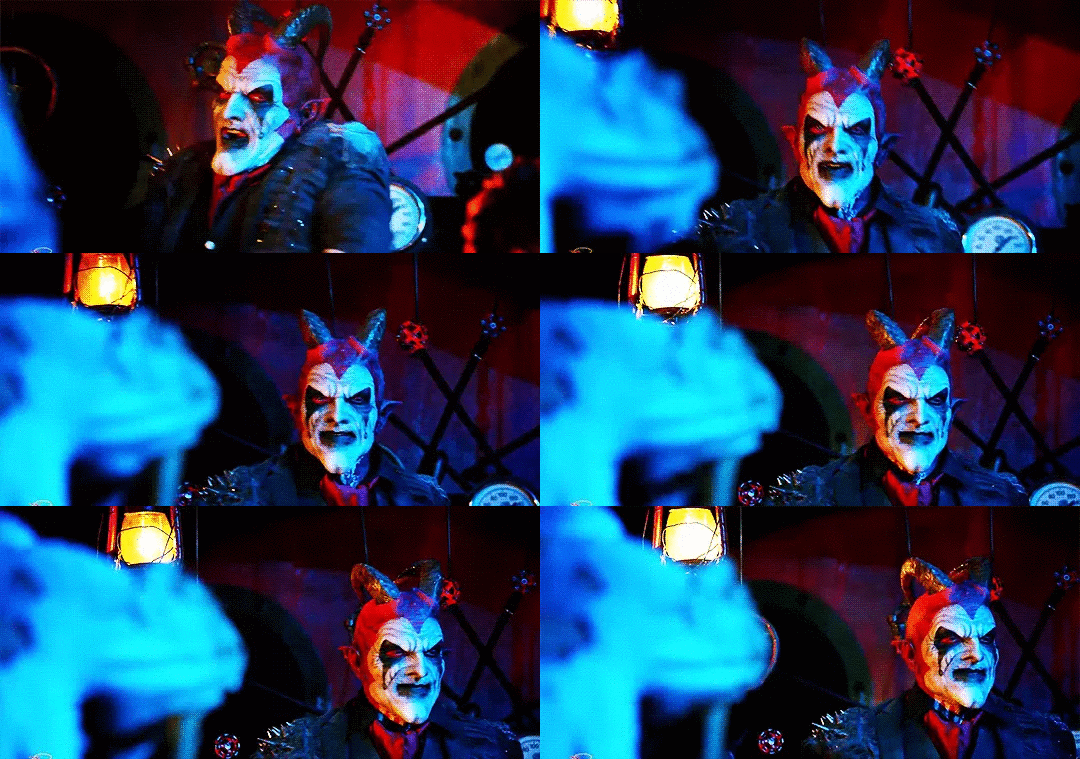
The Devil’s Carnival was a much less controversial film for Bousman and Zdunich, ironic given the material of the film. Reviewers described both it and Repo! as a “weird musicals for weird people” but praised them for this reason, in particular enjoying the soundtrack and the atmosphere that mostly came about from the low budget. When planning out the film, Bousman and Zdunich planned out a trilogy, starting with focusing on Hell and then shifting focus to Heaven. However after fans reacted positively to the characters of the carnies, especially Emilie Autumn’s Painted Doll, there was a slight change to cover both sides in the sequel, as well as expand on backstories. Thus, 2015’s The Devil’s Carnival:Alleluia! acts a both a prequel and sequel.
Plot
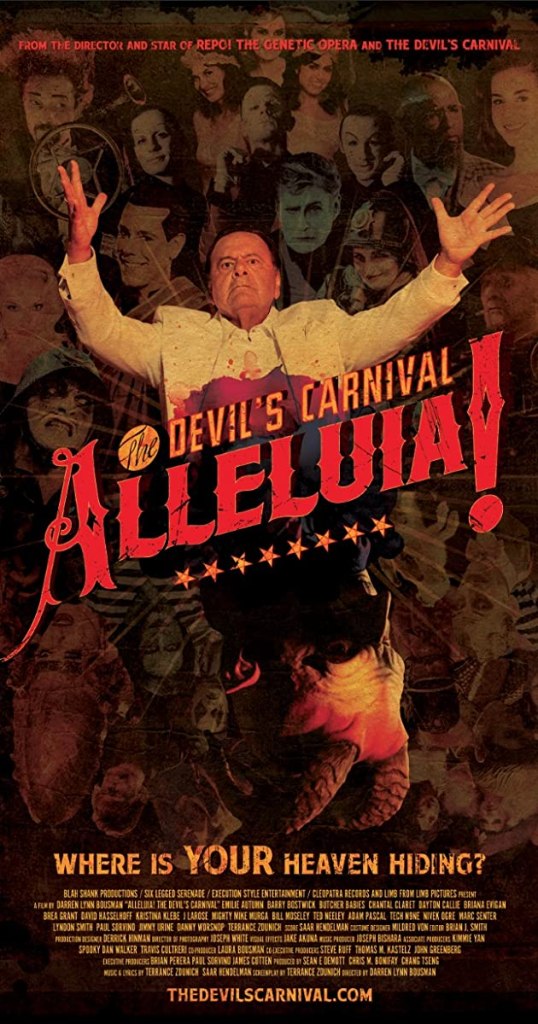
Following John’s absolution, Lucifer has began a campaign to go to war with Heaven, sending back trains of sinners and in the words of God “playing his damned music loudly like an impudent teenager.” Hence, He sends his number one, the Agent (played by Rent‘s Adam Pascal) to sort him out. As this happens, Ms Merrywood, played by Evigan as the only returning sinner, finds herself in Heaven as one of the damned, being questioned over a horseshoe brooch she found. Meanwhile in Hell, the Ticket Keeper has taken over the main running of the Carnival while Lucifer has gone into recluse, seemingly making no effort to act any further against Heaven. Instead he reads a fable to a cloaked figure, a reworking of The Ass and the Lap Dog, turning the donkey into a filly. Through this conceit, we learn the backstory of the Painted Doll, who was a former Applicant to Heaven, and consequently we see the inner workings of Heavenly Productions Inc. (How one incorporates Heaven is a question best left for another day.)
Cast
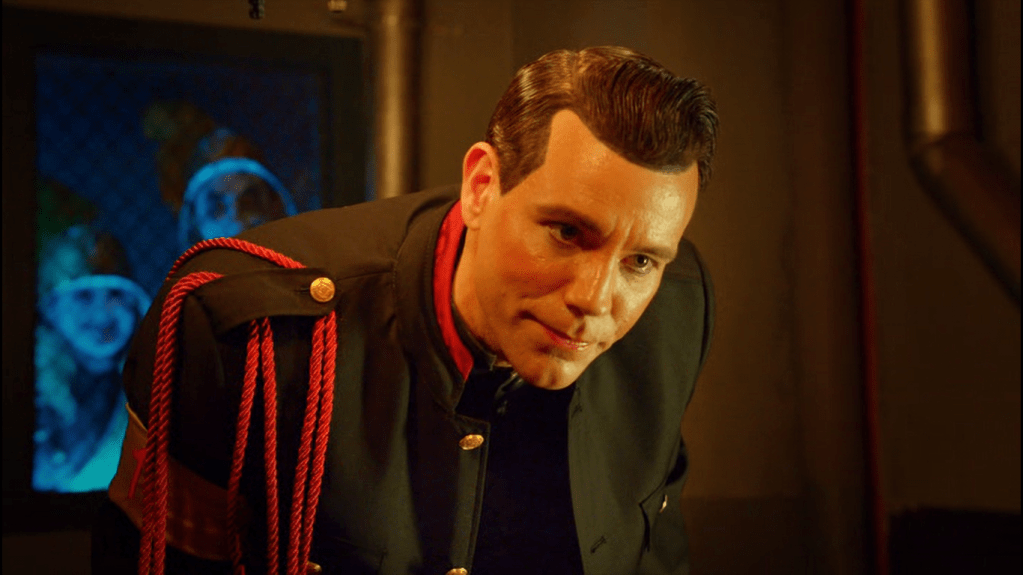
With the exception of Vega, Flanery and Lowndes, the majority of the named cast reprise their roles from the first film. Joining the cast for the Heaven segments is David Hasselhoff (yes, really) as the Designer, God’s fashion designer, rapper Tech N9ne as the Librarian, who catalogues all of “the Author’s” works, Barry Bostwick as the Watchword, a sort of tabloid journalist for Heaven, and Ted Neeley as the Publicist, Heaven’s PR person. I can’t imagine many films can tout having Michael Knight, Brad Majors and Jesus in its repertoire but Alleluia! can, and does with glee. Also in the cast are alt-rock couple Jimmy Urine (Mindless Self Indulgence) and Chantal Claret (Morningwood) as the Translators, a comedic duo who form Heaven’s secret police, and TV actress Lyndon Smith as Cora, the Painted Doll/June’s best friend who also became an Applicant.
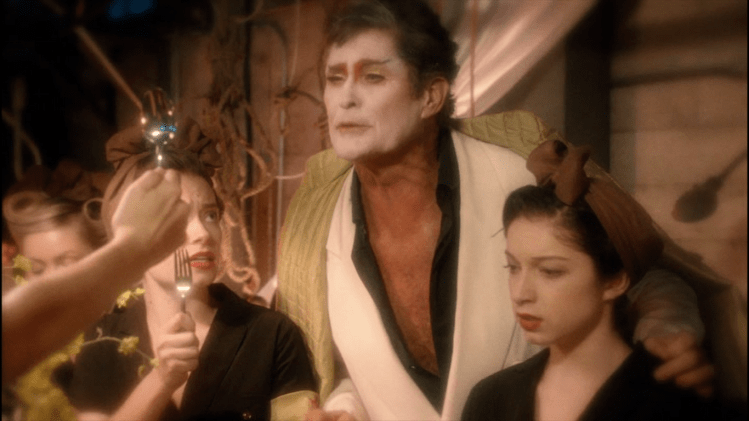
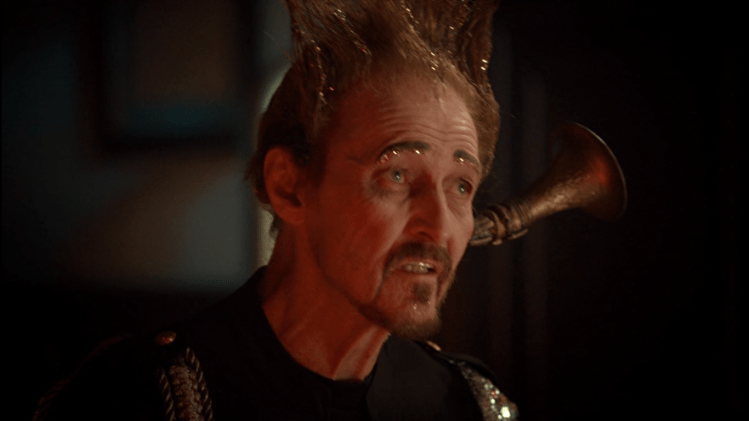
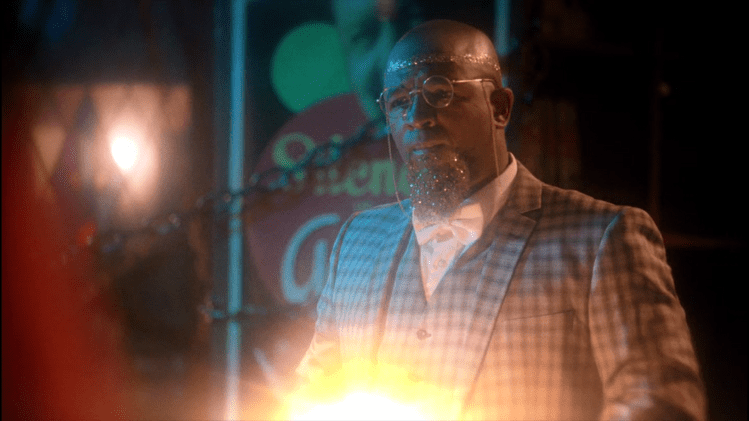
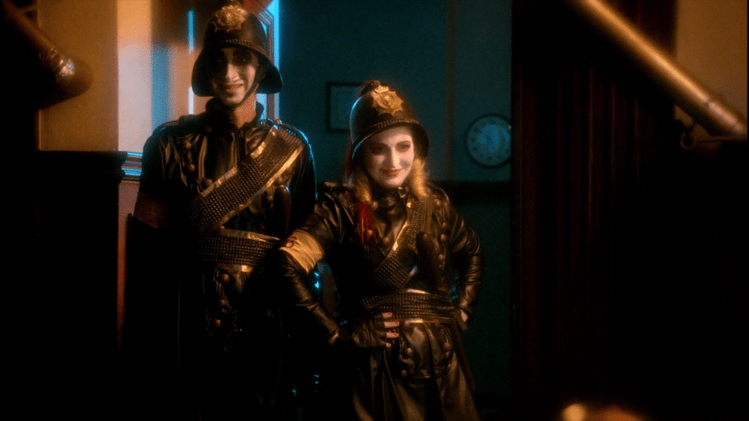
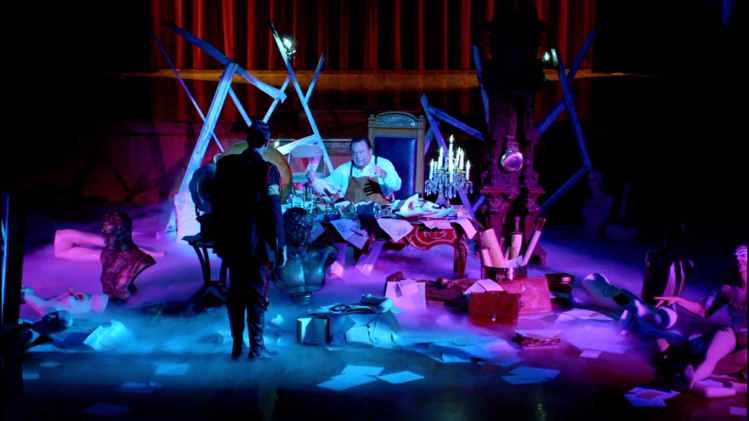
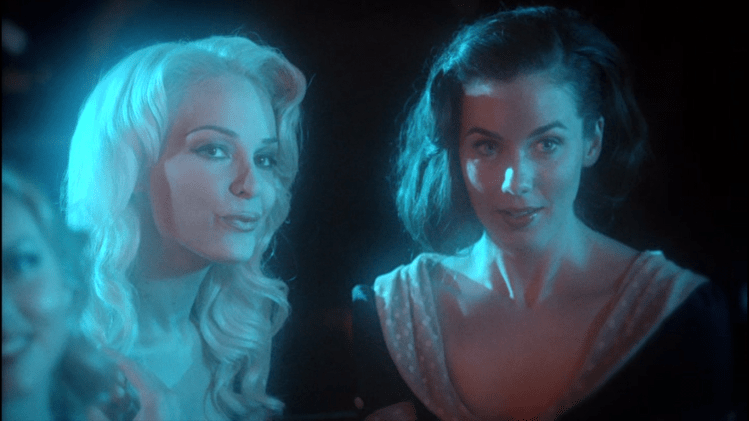
The film switching most of its focus to Heaven where previously all we saw was a dingy workshop allows for some gorgeously sinister set design. God’s workshop, bathed in dark blacks and blues contrasts heavily with the pristine white of the main lobby, and even some of the smaller sets have an overwhelmingly stifling sense to them, in particular the Designer’s workshop, cramped and filled with workers and Applicants. The decision to create a “Golden Age Hollywood meets 1984” motif for Heaven, to contrast the cruder and blatantly sinister Hell adds to the dystopic feeling. As mentioned before, the Translators are a comedic duo, even having a humourous song about how the invention of the dictaphone has made their job easier, they are still off-putting figures, and in two highly uncomfortable scenes show exactly what they mean by “translation.”
The Librarian, a quiet character, has an eerie command of his place and is probably the most outwardly commanding character, particularly towards the end when he issues a punishment to the Applicants as a group for June’s actions, while singing a song about how Heaven’s caste system means everything is done “by the book”, a phrase he repeats more forcefully and vitriolically with each verse.
The characterisation of the staff of Heavenly Productions Inc. is also wonderfully fleshed out. God, who was seen for maybe a minute in the first film, is characterised as someone raised in the lap of luxury or a big child, with several scenes having the Agent act almost a babysitter/caretaker. The raw contempt he has for both Lucifer and His own underlings is palpable, wonderfully acted by Paul Sorvino. The second scene of the film reflects his frustration with Lucifer’s actions, as well as his sheer childishness.
The prequel also shows us the beginning of the Carnival, which allows for some fantastic relationship development. The Keeper’s insistence on having a plan of action makes a lot more sense when we learn that the Carnival was a creation of his and Lucifer’s, which makes a scene towards the end where he rightfully calls out Lucifer for dawdling feel much more satisfying. The entire ending portion of the film, where we return to the present as both sides prepare themselves, is immensely satifying to watch. It’s unfortunate that the third film never came to be, as unfortunately Alleluia! does end on a cliffhanger, but enough is tied up to make the ending worthwhile nonetheless.
Music
The music in the film, as a reflection of the changes in setting, are quite a bit more varied than in the first film. From the Librarian’s rapping “Hitting On All Sevens” to God’s rallying call of “Bells of the Black Sunday” (a mirror of the first film’s “Grace for Sale”, which Lucifer plays intermittently to annoy Heaven) to the dark temptation of “After the Fall”, the song which convinces June to give in and join the Carnival, the music is all fantastic. Unfortunately, due to the stronger emphasis on story, some of the songs are placed somewhat haphazardly, which impacts the pacing of the film. One of my major praises of the first film was the pacing, despite it being less than an hour long. This film, clocking in at 97 minutes, has moments where it does feel like it’s dragging its feet. That said, individually the songs are all fantastic. Particular favourites are Emilie Autumn’s “Hoof and Lap” which closes out the film and the aforementioned “Bells of the Black Sunday”, a song about the most destructive dust storm in American history that God brags about.

Notably, most of Heaven’s songs share a refrain somewhere, the phrase “All children of heaven sing Alleluia.” In the credits (also containing Pascal’s “Songs of Old”, a cheery ditty), we hear the full prayer, and the singers sound downright terrified. The hymn, simply called “Alleluia”, sings of how Heaven can do whatever it wishes to mend the singers’ soul, and tell them what to do. On it’s own it isn’t unexpected from what we’ve seen of Heavenly Productions Ltd., but when the line is used almost as a defence by other characters and you realise that the heavenly ideal of total control is a comfort to them, it shines a new light on the dystopia of Heaven.
Conclusion
Overall, this is a fantastic film. While it does have some pacing issues and sometimes the extravagant cast can border on distracting, the story and setup of the prequel aspect is fantastically woven into the precedent set in the first film, the focus on the denizens of the Carnival and Heavenly Productions allows for character developments that the first film couldn’t really afford, and while we know now the last film in the trilogy is all but cancelled, the cliffhanger ending left enough questions in the air while answering just as many to still leave a satisfying ending. Overall I really can’t recommend it enough!
That is it from me, but I hope you enjoyed this look at the weird and wacky worlds of Zdunich and Bousman. See you!
 Dweebs Do Movies